



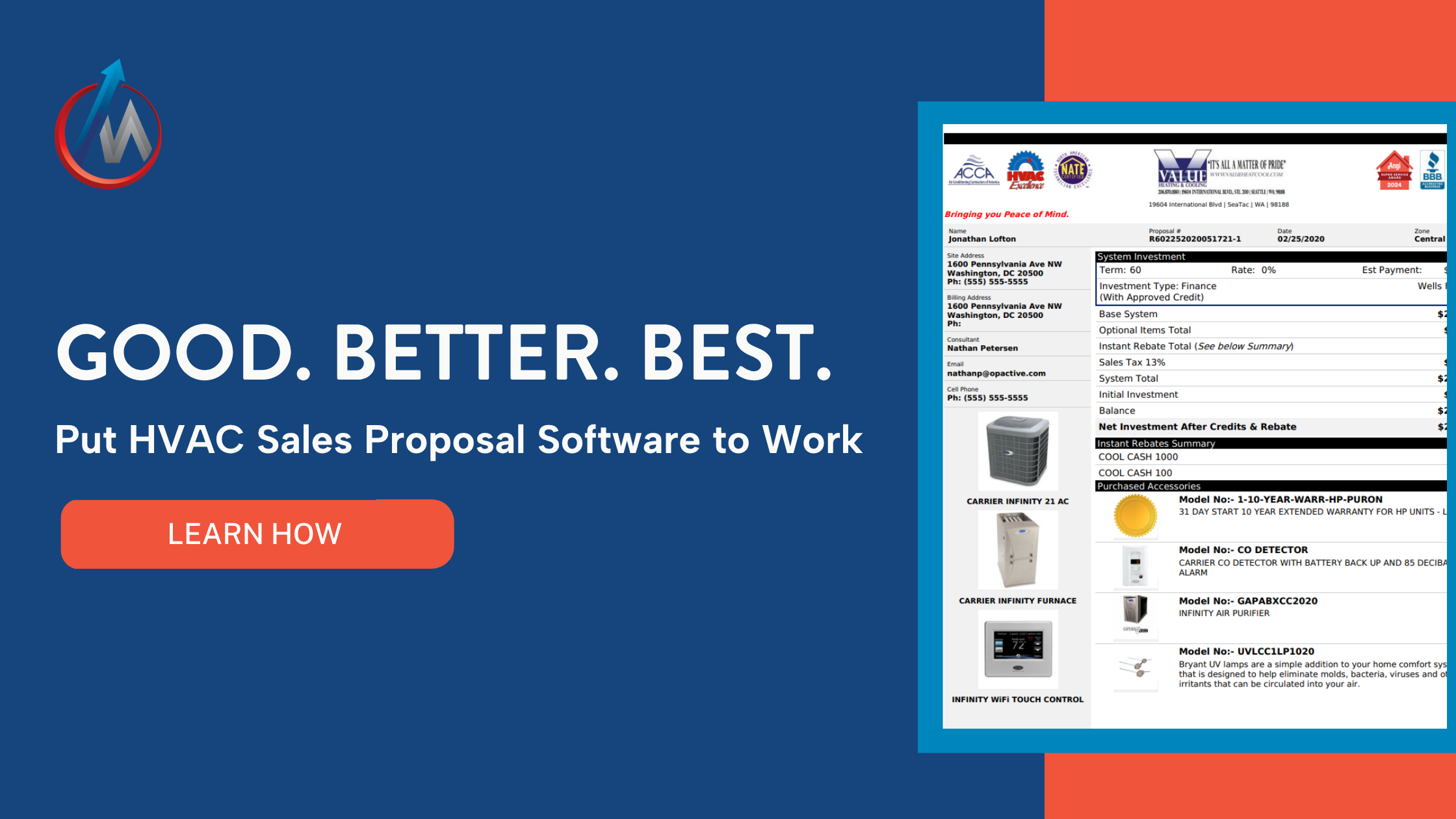
Your best comfort advisor knows how to ask the right questions, explain the options, and help a homeowner feel confident about a big purchase. But how much of that process carries over to the rest of your sales team?
If every advisor builds proposals differently, customers may get very different experiences from the same company. HVAC sales proposal software can help you turn a strong individual approach into a process your whole department can follow.
Two findings from ACCA’s 2025 Contractor of the Future Study make that conversation especially relevant: giving customers more choices and making better use of technology. Together, they give HVAC owners a useful starting point for improving how their teams sell.
Give homeowners more ways to say yes
The ACCA study surveyed more than 1,000 HVACR contractors. Those presenting at least four options reported a 52% close rate, compared with 42% for contractors using the traditional good, better, best approach. That’s a difference of 10 percentage points. Yet only 10% of contractors were offering four or more options.
Your team needs enough flexibility to recommend solutions that fit:
Different homes
Priorities
Budgets
Finding that fit starts with asking questions.
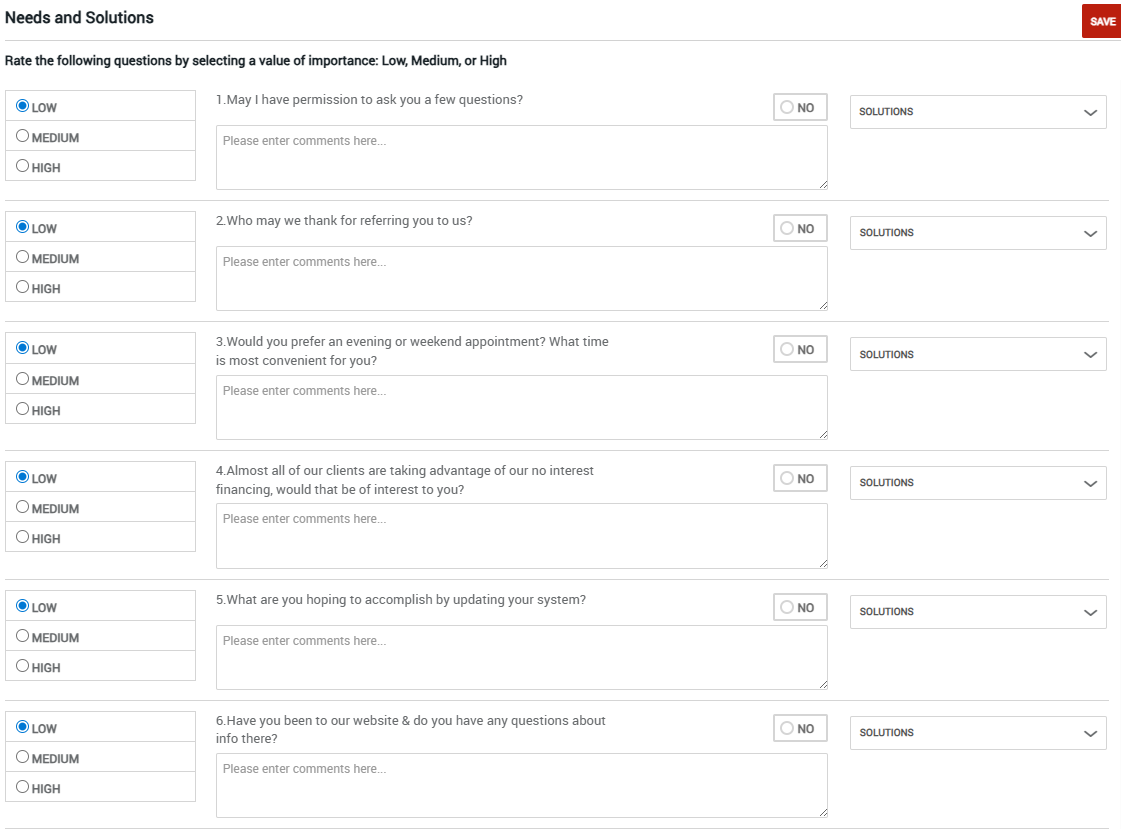
Consider a homeowner with allergies in the family. They might be willing to invest in an option with upgraded filtration once they understand what it offers. But that conversation may never happen if the salesperson or technician doesn’t first ask, “Does anyone in your home suffer from allergies?”
The answer gives your advisor a reason to explore the concern and explain relevant options, including what those products can realistically do. Another homeowner may care more about uneven temperatures, noise, or how long they plan to stay in the house. Each conversation should shape the proposal that follows.
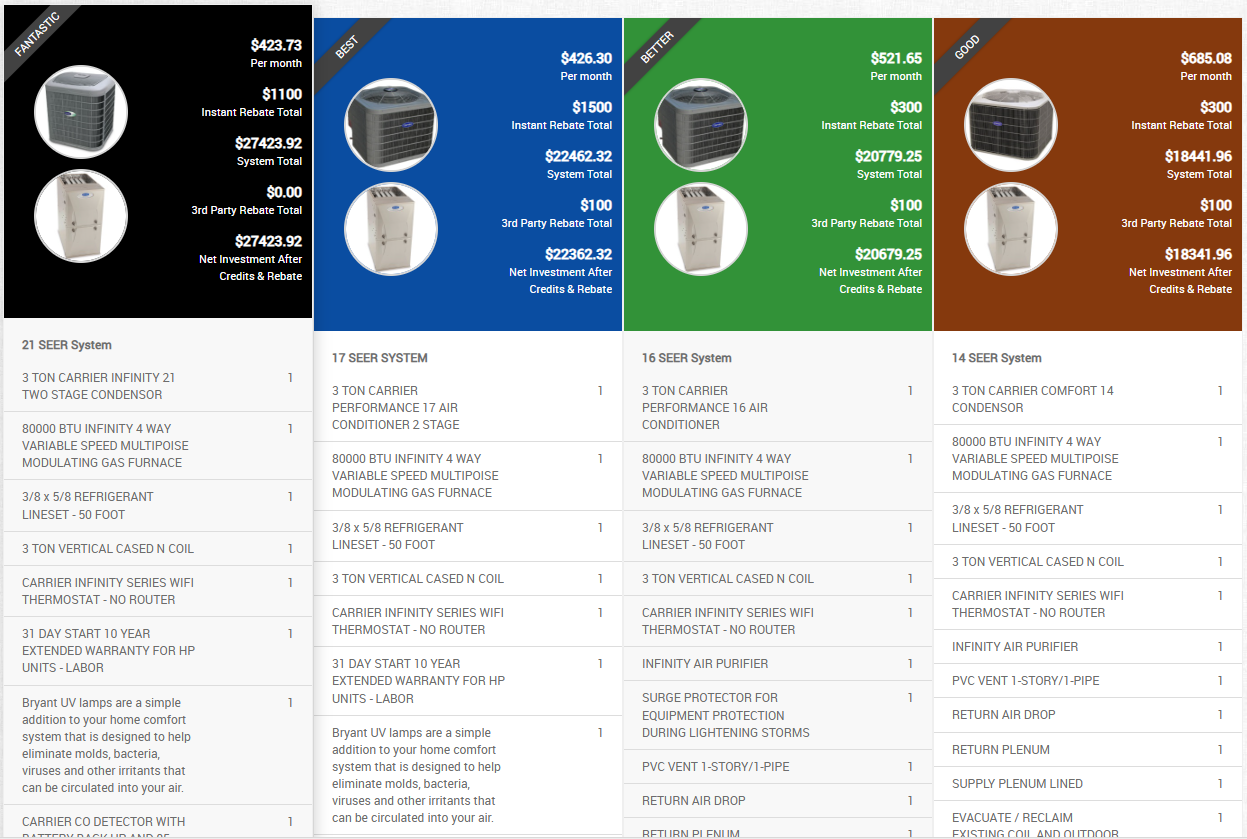
his is how you compete on value. When homeowners understand how a recommendation addresses something that matters to them, they have more to consider than the price alone. Just adding a fourth equipment package won’t create that understanding. Your team has to ask, listen, and explain why each choice belongs in the proposal.
Put technology to work in the sales conversation
ACCA also found that 56% of HVACR contractors had field service management software, but many were using it mainly for invoicing. Sales proposals and other capabilities were going underused.
For business owners, that raises a useful question: Is your technology helping your team follow a better sales process?
Software can make that process part of the daily workflow. Templates give advisors a starting point. A defined sequence helps them move from learning about the homeowner to building options and presenting a recommendation. Documenting those steps and the resulting proposal gives the company a record of how the sale developed.
Opportunity Manager provides a sales process for your team to follow, with proposal templates built for you. That shared starting point makes it easier to establish expectations across the department and bring new salespeople into the way your company sells.
The process should guide the conversation while leaving room to personalize it. Every advisor should learn what matters to the homeowner, but the answers will lead to different recommendations. Consistency in the steps creates room for flexibility in the solutions.
Use HVAC sales proposal software to protect value and margin
Selling a more complete solution also means knowing that the price makes sense for your business. If advisors work from different spreadsheets or outdated product information, it becomes harder to manage what they offer and how they price it.
Opportunity Manager lets you maintain pricing and margin settings in the software, giving the team a common basis for building proposals. Advisors can present appropriate equipment enhancements and upsell products with a clearer understanding of the company’s pricing expectations.
Keeping product selections and sales information organized also gives your team useful input for inventory planning. Reviewing what customers are choosing can help sales and operations discuss which products to keep available and which options need attention. Pair that information with current inventory records to keep recommendations aligned with what you can deliver.
Use the results to improve the whole department
Reporting helps you see who is performing well and where to investigate further. Opportunity Manager’s sales reports give managers a starting point for reviewing performance and the financial results of their sales process.
Look beyond the total number of jobs sold. Compare close rates and average sales, then review margins to understand whether those sales are producing the results you need. A larger sale deserves closer attention if discounting or product costs leave too little profit.
The numbers can also guide coaching. If one advisor consistently sells more enhancements, review their proposals and ask how they uncover customer needs. Reports show patterns; conversations with the team help explain why. Use what you learn to improve your templates, training, and sales process.
At your next sales meeting, start with a few recent proposals.
Did the options reflect the homeowner’s priorities?
Was the value clear?
Was pricing consistent?
Those questions can help turn the ACCA findings into a practical improvement for your business: more relevant choices for customers and a stronger process for everyone who sells for your company.
Give Your Sales Team a Stronger Starting Point
Help every advisor ask better questions, present meaningful options, and sell on value. See how Opportunity Manager brings your sales process, proposals, pricing, and reporting together.